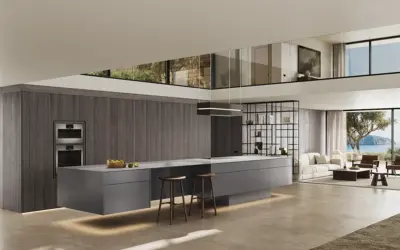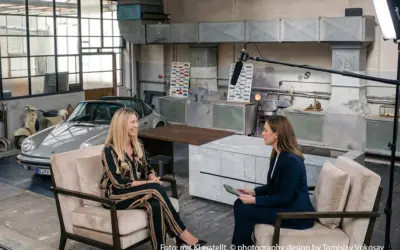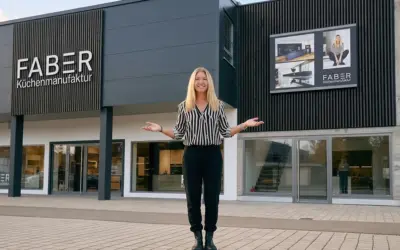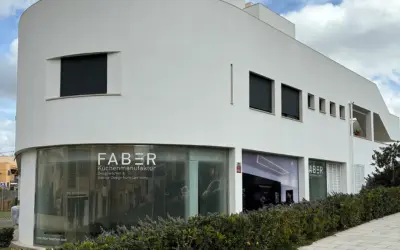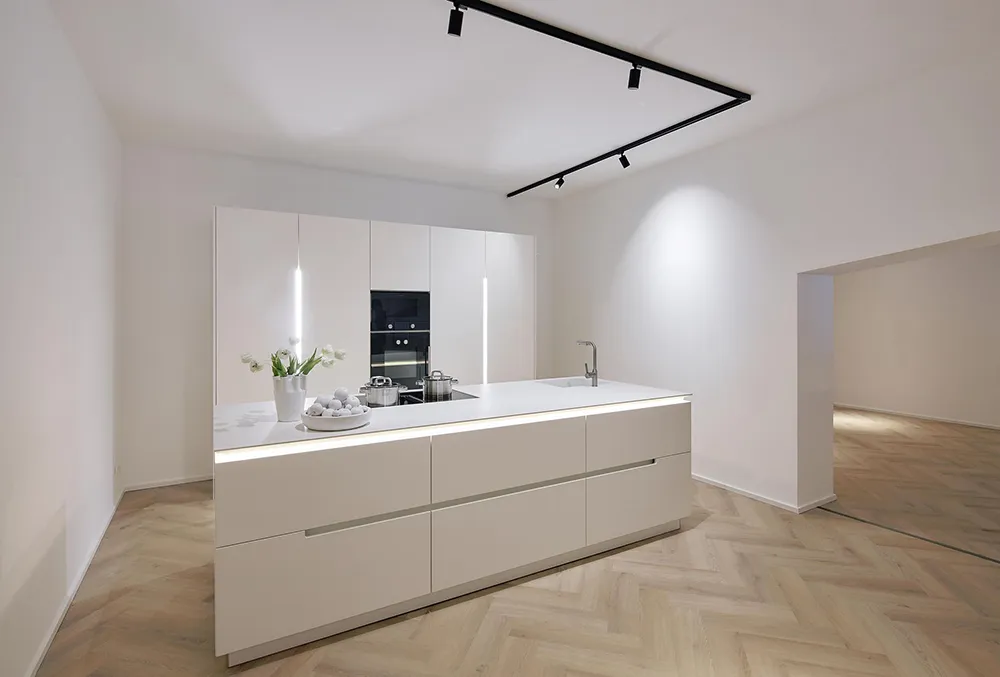
There is a moment when you enter a house in which everything is decided. Before a word is said about location, floor plan or square metres, the space has already spoken. And increasingly, it is the kitchen that shapes this first, unerring impression. It is the place where polite interest becomes genuine desire. Or it does not. Anyone who truly understands the value of an exceptional property knows that, to a remarkable extent, it is decided in this one room.
The room that sets the tone
The kitchen has risen from a hidden functional space to the undisputed heart of the home. The open-plan kitchen has replaced the separate kitchenette, and cooking, living and entertaining now merge into a single, generous living space. In the upper segment, the kitchen has thus become the showpiece room, as Handelsblatt describes this development: the room one shows with pride rather than hiding behind doors. Renowned interior architects put it unequivocally: kitchen, living area and dining area must be of a piece.
This upgrade meets an existing stock that, in many places, is out of step with the times. In around sixteen million residential units in Germany, the kitchen is more than twenty years old—well over a third of all households. A property that, at this point, presents a thoughtfully and uncompromisingly designed kitchen stands out with an ease no brochure needs to describe. For the discerning buyer, it is not a feature detail, but the promise that the entire house has been conceived with the same care.
Between return calculations and truth
Of course, value can also be expressed in sober figures, and they should be assessed honestly. Return calculations from the Anglo-American market put the cost recovery of a modest kitchen update at up to ninety-six per cent, while extensive, high-quality remodels average closer to half (Remodelling Cost vs. Value Report 2024, USA). In Germany, advisers often recommend not investing more than fifteen to twenty per cent of the property’s value in modernisations.
Yet these rules of thumb come from the logic of a quick resale—and that is precisely where their validity ends. They favour the neutral, the unobtrusive, the readily comparable. For a interchangeable property, that may be the right calculation; for an exceptional one, it never is. An estate in Son Vida, a penthouse above the harbour of Port d’Andratx, an architect-designed villa in greenery derives its value not from the expected, but from the uncompromising. While the German average spends around twelve thousand euros on a new kitchen, a kitchen worthy of such a house starts at many times that. They are two different worlds, and only one of them can ever be captured in a table.
Materials refined by time
Enduring value never comes from what is currently in demand, but from what lasts. A Masterpiece is not built for a season. Hot-rolled stainless steel, solid blackened steel, natural stone and solid brass do not age in the conventional sense; they mature. The patina they develop over the years is not a flaw, but a biography written into the surface. Those who choose authentic materials choose material honesty over imitation—and so the mere claim of enduring value becomes a physical property. The character each individual material reveals is shown in depth in our Materials.
A kitchen conceived as part of the architecture
Value is created where a kitchen is not placed into a room, but developed from it. That requires understanding a house’s light, reading its sightlines and sensing how people move through the spaces. A kitchen precisely aligned to the architecture becomes an inseparable part of the property, not a fitted unit the next owner removes again. That is exactly what Faber stands for: made-to-measure kitchens that do not merely complement architecture, but complete it. How impressively this can be achieved is revealed by our four Masterpieces.
The manufactory’s signature
And finally, true value reveals itself in what is unseen. Behind a front in stone or steel, hand-dovetailed drawers in solid oak and walnut reveal the attention to detail that shapes every single Project. Visible craftsmanship becomes an expression of quality and permanence. You do not merely see this quality; you feel it with every touch, and you will still recognise it after two decades. A special house can quietly lose out with an ordinary kitchen. With a bespoke handcrafted kitchen, by contrast, it gains with every year.
You can compare Pricing. Not a Masterpiece.
In the end, the question is not how many per cent of an investment can be recovered on sale. It is about value in the truest sense: permanence, longevity, a daily experience no table will ever capture. The price of a kitchen is created in the planning. The value, however, remains—and grows with the property to which it belongs. A kitchen does not increase that value because it is expensive, but because it is right: made from authentic materials, conceived as part of the architecture, crafted by hand. What results is not a feature, but a reason to choose this one house.
If your property, too, deserves the one room that endures, the path begins with a conversation. Find out what a bespoke handcrafted kitchen by Faber costs, or arrange your personal planning consultation in your home.
Warm regards
Michaela Faber
Frequently asked questions
Does a new kitchen increase a property’s value?
Yes. The kitchen is now regarded as a central space within a property and has a decisive influence on the purchase decision. Particularly in the upper segment, a high-quality kitchen integrated into the architecture increases both the perceived value and the saleability of the entire property.
By how much does a kitchen increase a property’s value?
Flat percentage figures are misleading. Return calculations from the USA cite cost recovery of up to around ninety-six per cent for minor kitchen updates, and closer to fifty per cent for extensive remodels. In the premium segment, what matters less is the percentage return than whether the kitchen does the property justice. An exceptional house gains disproportionately from an exceptional kitchen.
Which kitchen increases value the most?
A kitchen designed for the long term: made from authentic, durable materials such as natural stone, hot-rolled stainless steel or solid wood, integrated millimetre-perfectly into the home’s architecture and crafted to manufactory standards. Such kitchens age with dignity and retain their impact for decades.
Is a high-quality kitchen worthwhile when selling a luxury property?
For exceptional properties, yes. Here, the kitchen is often the room that makes the difference. A bespoke handcrafted kitchen underscores the quality of the entire property and appeals precisely to the buyer group that is relevant for such homes. An outdated or unsuitable kitchen, by contrast, costs emotional appeal and lowers perceived value.
Which kitchen materials are particularly enduring in value?
Authentic, solid materials: natural stone, hot-rolled and polished stainless steel, blackened steel, solid brass, as well as solid oak and walnut. They do not wear out; instead, over the years they develop a distinctive patina that makes their value visible.