
FAQs

Your content goes here. Edit or remove this text inline or in the module Content settings. You can also style every aspect of this content in the module Design settings and even apply custom CSS to this text in the module Advanced settings.
Questions about materials
Exceptional materials are the heart of every Faber kitchen. To help you better understand the characteristics of the individual materials, we have compiled the most frequently asked questions about our materials for you.
Which materials does Faber Küchenmanufaktur work with?
We work with metals such as hot-rolled and polished stainless steel, blackened steel, solid brass and aluminium, mineral materials such as natural stone, ceramic, shell limestone and concrete, as well as solid wood and real wood veneer. In addition, we offer other surfaces such as Fenix, RAL lacquer, Farrow & Ball and REHAU glass.
What is hot-rolled stainless steel?
Hot-rolled stainless steel is stainless steel that is rolled while red-hot. This creates a matt, warm surface with a lively, cloudy structure. Unlike ordinary stainless steel, it does not appear cool, but possesses depth and character, making every surface a one-of-a-kind piece.
What is the difference between hot-rolled and polished stainless steel?
Polished stainless steel is smooth, reflective and clear, exuding a cool, glamorous elegance. Hot-rolled stainless steel is matt, warm and cloudy, developing a lively patina over time. One represents flawless perfection, the other a living character.
How does the patina develop on solid brass?
When freshly manufactured, brass glows in a warm gold. Through light, heat and the touch of everyday use, it gradually acquires a lively patina ranging from delicate amber tones to deep brown. Those wishing to preserve the fresh appearance can have the brass sealed.
What is the difference between a trowelled concrete finish and solid concrete?
A trowelled concrete finish is applied by hand as a fine, millimetre-thin layer and is lightweight as well as completely seamless. Solid concrete is cast in a mould and is a thoroughly authentic, monolithic material with full weight and great depth. Both are one-of-a-kind pieces, but differ in construction and effect.
What is solid blackened steel?
Solid blackened steel is a deep dark metal whose characteristic colouring is created by a natural scale layer. It appears matt and monolithic, shows fine rolling marks and makes every surface unmistakable. Only a few manufactories process it with such consistency.
What is the difference between solid wood and real wood veneer?
Solid wood consists entirely of real wood. Real wood veneer is a fine layer of real wood on a stable substrate. Both display the natural beauty of real wood. Veneer is particularly dimensionally stable and allows for large, continuous grain patterns.
What are the advantages of natural stone over ceramic and vice versa?
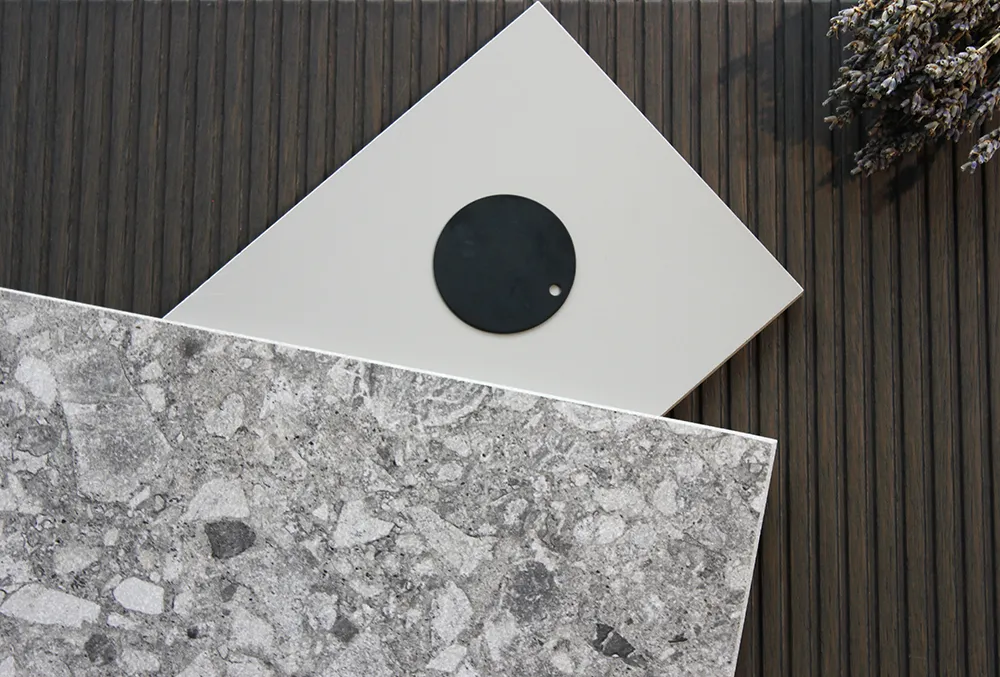
Natural stone is a geological original, where every slab becomes a one-of-a-kind piece due to its grain. Ceramic is particularly resistant, scratch-proof, heat-resistant and easy to maintain, and can be manufactured in almost any appearance. Natural stone impresses with its authenticity, ceramic with its versatility and robustness.
What is laminate or Resopal?
Laminate, often known under the brand name Resopal, is a particularly versatile surface. It can be manufactured in almost any appearance and colour, is hygienic, easy to care for and very straightforward in everyday use.
What is Fenix?
Fenix is a modern, ultra-matt surface with a velvety feel. It reflects hardly any light, remains almost free of fingerprints and is antibacterial as well as very easy to maintain. Fine micro-scratches can even be closed again using heat.
Which materials are particularly suited to a kitchen on Mallorca?
For kitchens near the sea, particularly resilient materials such as anodised aluminium, ceramic and natural stone are especially suitable, as they are resistant to sun and salt-laden air. We are happy to advise you on which material suits your property and its location.
Which materials develop a patina over time?
Above all, hot-rolled stainless steel, solid brass, blackened steel and solid wood change over the years and develop a lively patina. This transformation is intentional, as it gives each kitchen a distinctive, personal character.

Questions about Pricing
Faber kitchens are individually planned Masterpieces, and their price depends on many factors. Nevertheless, we would like to give you an initial point of reference. Prices can be compared. A Masterpiece cannot.
What determines the price of a Faber kitchen?
The price depends, among other things, on size, material, interior fittings, appliances, technical requirements and the degree of customisation. Every Faber kitchen is individually planned and crafted, which is why the final price is always determined during the planning process.
What does a bespoke handcrafted kitchen from Faber cost?
A Faber kitchen is created exclusively in the top premium segment. As an initial point of reference, a bespoke handcrafted kitchen starts at around €30,000 to €70,000. The exact price is determined by your individual design.
What does a luxury kitchen on Mallorca cost?
Luxury projects on Mallorca start at around €80,000, depending on the fittings and requirements. In the luxury segment, there are virtually no limits to the design possibilities. For Mallorca, Faber has established its own company on the island. It handles sales locally and is your contractual partner for your project. Planning, site survey and support are carried out directly by our team on Mallorca.
What does a kitchen made of hot-rolled stainless steel or solid brass cost?
As an initial point of reference, kitchens made from special metals start at around €65,000 for hot-rolled stainless steel and from around €95,000 for solid brass. As these materials are solid and processed by elaborate handcraftsmanship, the price depends greatly on scope and execution.
What does a concrete kitchen cost?
This depends on whether you choose a troweled or solid concrete finish. A kitchen with a troweled concrete surface starts at around €35,000. Solid concrete is considerably more cost-intensive due to its weight and the elaborate processing involved, starting at around €80,000.
Why does Faber work with price ranges rather than fixed prices?
Because every Faber kitchen is a one-of-a-kind piece. The final price is only determined once material, size, fittings and execution have been defined. Price ranges give you a realistic point of reference without pre-empting the individual planning process.
All prices are non-binding indicative figures. Every Faber kitchen is individually planned and crafted. The final price depends on size, material, construction and fittings.

What do the Masterpieces cost?
Our four Masterpieces represent the extraordinary. Each one is individually planned and crafted, which is why its value cannot be reduced to a single price. The following figures serve as an initial point of reference.
What does the Floating Masterpiece cost?
The Floating Masterpiece, with its island made of hot-rolled stainless steel, starts at around €80,000 as an initial point of reference. The final price depends on size, material and fittings.
What does The Architect's Kitchen cost?
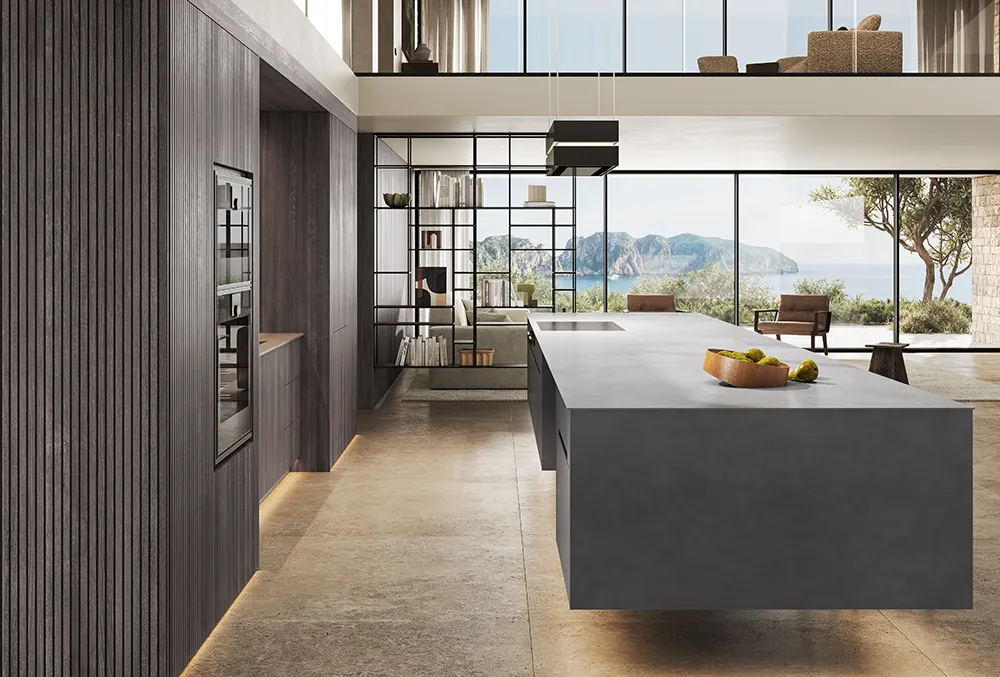
The Architect's Kitchen, with its slatted wall in oak and island in solid blackened steel, starts at around €60,000 as an initial point of reference. Every project is individually designed and crafted.
What does CUBE cost?
CUBE has a modular design and grows with your requirements. In its most compact form, it combines three functions in individual modules: washing, cooking and preparation. From this base, it can be freely extended, right through to a generous island or a solution for indoors and outdoors. Depending on material and execution, CUBE starts at €45,000.
What does the stone kitchen cost?
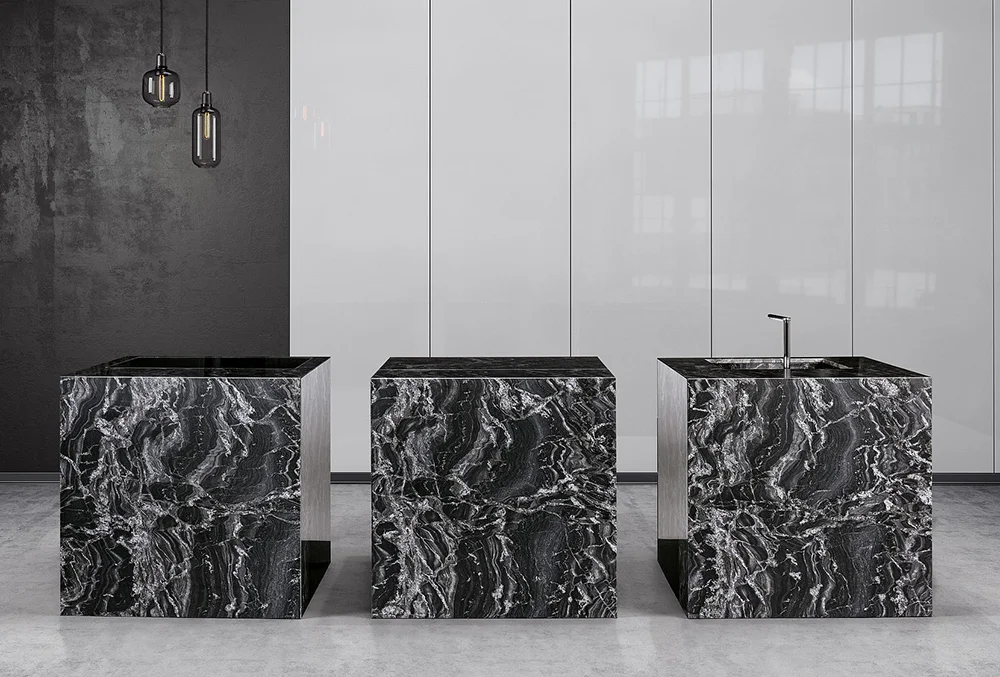
The stone kitchen, with its natural stone or ceramic surface, starts at around €80,000 as an initial point of reference. As every stone is a one-of-a-kind piece, the exact price is determined during individual planning.

Questions about materials
Exceptional materials are the heart of every Faber kitchen. To help you better understand the characteristics of the individual materials, we have compiled the most frequently asked questions about our materials for you.
Which materials does Faber Küchenmanufaktur work with?
We work with metals such as hot-rolled and polished stainless steel, blackened steel, solid brass and aluminium, mineral materials such as natural stone, ceramic, shell limestone and concrete, as well as solid wood and real wood veneer. In addition, we offer other surfaces such as Fenix, RAL lacquer, Farrow & Ball and REHAU glass.
What is hot-rolled stainless steel?
Hot-rolled stainless steel is stainless steel that is rolled while red-hot. This creates a matt, warm surface with a lively, cloudy structure. Unlike ordinary stainless steel, it does not appear cool, but possesses depth and character, making every surface a one-of-a-kind piece.
What is the difference between hot-rolled and polished stainless steel?
Polished stainless steel is smooth, reflective and clear, exuding a cool, glamorous elegance. Hot-rolled stainless steel is matt, warm and cloudy, developing a lively patina over time. One represents flawless perfection, the other a living character.
How does the patina develop on solid brass?
When freshly manufactured, brass glows in a warm gold. Through light, heat and the touch of everyday use, it gradually acquires a lively patina ranging from delicate amber tones to deep brown. Those wishing to preserve the fresh appearance can have the brass sealed.
What is the difference between a trowelled concrete finish and solid concrete?
A trowelled concrete finish is applied by hand as a fine, millimetre-thin layer and is lightweight as well as completely seamless. Solid concrete is cast in a mould and is a thoroughly authentic, monolithic material with full weight and great depth. Both are one-of-a-kind pieces, but differ in construction and effect.
What is solid blackened steel?
Solid blackened steel is a deep dark metal whose characteristic colouring is created by a natural scale layer. It appears matt and monolithic, shows fine rolling marks and makes every surface unmistakable. Only a few manufactories process it with such consistency.
What is the difference between solid wood and real wood veneer?
Solid wood consists entirely of real wood. Real wood veneer is a fine layer of real wood on a stable substrate. Both display the natural beauty of real wood. Veneer is particularly dimensionally stable and allows for large, continuous grain patterns.
What are the advantages of natural stone over ceramic and vice versa?
Natural stone is a geological original, where every slab becomes a one-of-a-kind piece due to its grain. Ceramic is particularly resistant, scratch-proof, heat-resistant and easy to maintain, and can be manufactured in almost any appearance. Natural stone impresses with its authenticity, ceramic with its versatility and robustness.
What is laminate or Resopal?
Laminate, often known under the brand name Resopal, is a particularly versatile surface. It can be manufactured in almost any appearance and colour, is hygienic, easy to care for and very straightforward in everyday use.
What is Fenix?
Fenix is a modern, ultra-matt surface with a velvety feel. It reflects hardly any light, remains almost free of fingerprints and is antibacterial as well as very easy to maintain. Fine micro-scratches can even be closed again using heat.
Which materials are particularly suited to a kitchen on Mallorca?
For kitchens near the sea, particularly resilient materials such as anodised aluminium, ceramic and natural stone are especially suitable, as they are resistant to sun and salt-laden air. We are happy to advise you on which material suits your property and its location.
Which materials develop a patina over time?
Above all, hot-rolled stainless steel, solid brass, blackened steel and solid wood change over the years and develop a lively patina. This transformation is intentional, as it gives each kitchen a distinctive, personal character.
Questions about Pricing
Faber kitchens are individually planned Masterpieces, and their price depends on many factors. Nevertheless, we would like to give you an initial point of reference. Prices can be compared. A Masterpiece cannot.
What determines the price of a Faber kitchen?
The price depends, among other things, on size, material, interior fittings, appliances, technical requirements and the degree of customisation. Every Faber kitchen is individually planned and crafted, which is why the final price is always determined during the planning process.
What does a bespoke handcrafted kitchen from Faber cost?
A Faber kitchen is created exclusively in the top premium segment. As an initial point of reference, a bespoke handcrafted kitchen is around €50,000. The exact price is determined by your individual design.
What does a luxury kitchen on Mallorca cost?
For projects on Mallorca, a luxury kitchen is around €50,000 as an initial point of reference. Planning, site survey and local support are handled by our team on the island, while manufacturing and processing take place through our German manufactory.
What does a kitchen made of hot-rolled stainless steel or solid brass cost?
Kitchens made from special metals such as hot-rolled stainless steel or solid brass are around €50,000 as an initial point of reference. As these materials are solid and processed by elaborate handcraftsmanship, the price depends greatly on scope and execution.
What does a concrete kitchen cost?
Whether troweled or solid concrete, a concrete kitchen is around €50,000 as an initial point of reference. Solid concrete is generally more cost-intensive than a troweled surface due to its weight and the elaborate processing involved.
Why does Faber work with price ranges rather than fixed prices?
Because every Faber kitchen is a one-of-a-kind piece. The final price is only determined once material, size, fittings and execution have been defined. Price ranges give you a realistic point of reference without pre-empting the individual planning process.
What do the Masterpieces cost?
Our four Masterpieces represent the extraordinary. Each one is individually planned and crafted, which is why its value cannot be reduced to a single price. The following figures serve as an initial point of reference.
What does the Floating Masterpiece cost?
The Floating Masterpiece, with its island made of hot-rolled stainless steel, is around €50,000 as an initial point of reference. The final price depends on size, material and fittings.
What does The Architect's Kitchen cost?
The Architect's Kitchen, with its slatted wall in oak and island in solid blackened steel, is around €50,000 as an initial point of reference. Every project is individually designed and crafted.
What does CUBE cost?
CUBE, as a modular architectural system, is around €50,000 as an initial point of reference. As CUBE is made up of freely combinable modules, the price depends on scope and choice of material.
What does the stone kitchen cost?
The stone kitchen, with its natural stone or ceramic surface, is around €50,000 as an initial point of reference. As every stone is a one-of-a-kind piece, the exact price is determined during individual planning.
References: The four Masterpieces
The Floating Masterpiece
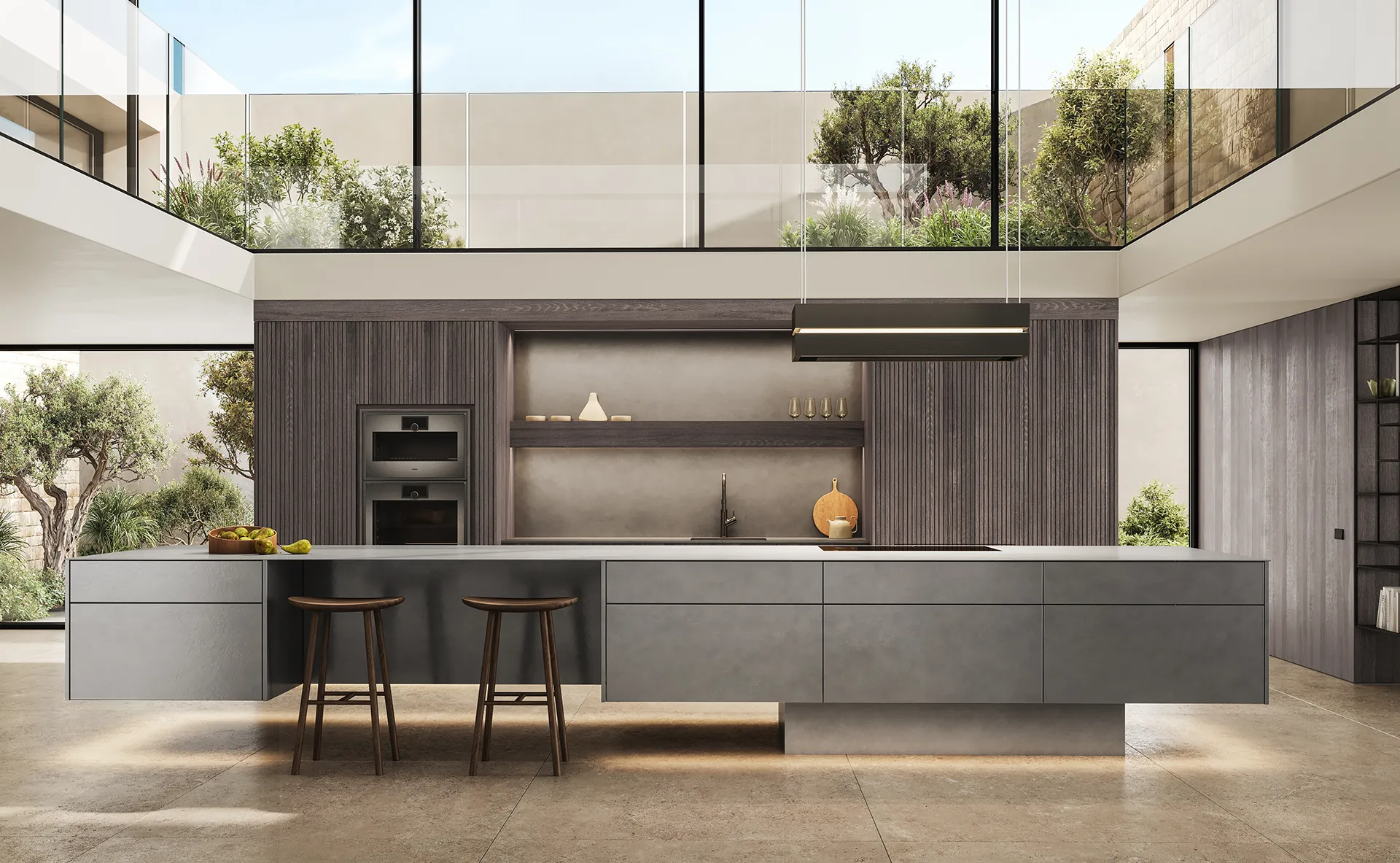
Our floating kitchen stages lightness as its central design element. An ingenious central steel structure supports both worktop and carcass in such a way that the supporting leg visually recedes into the background. The island appears to float, opening up the space to new lines of sight.
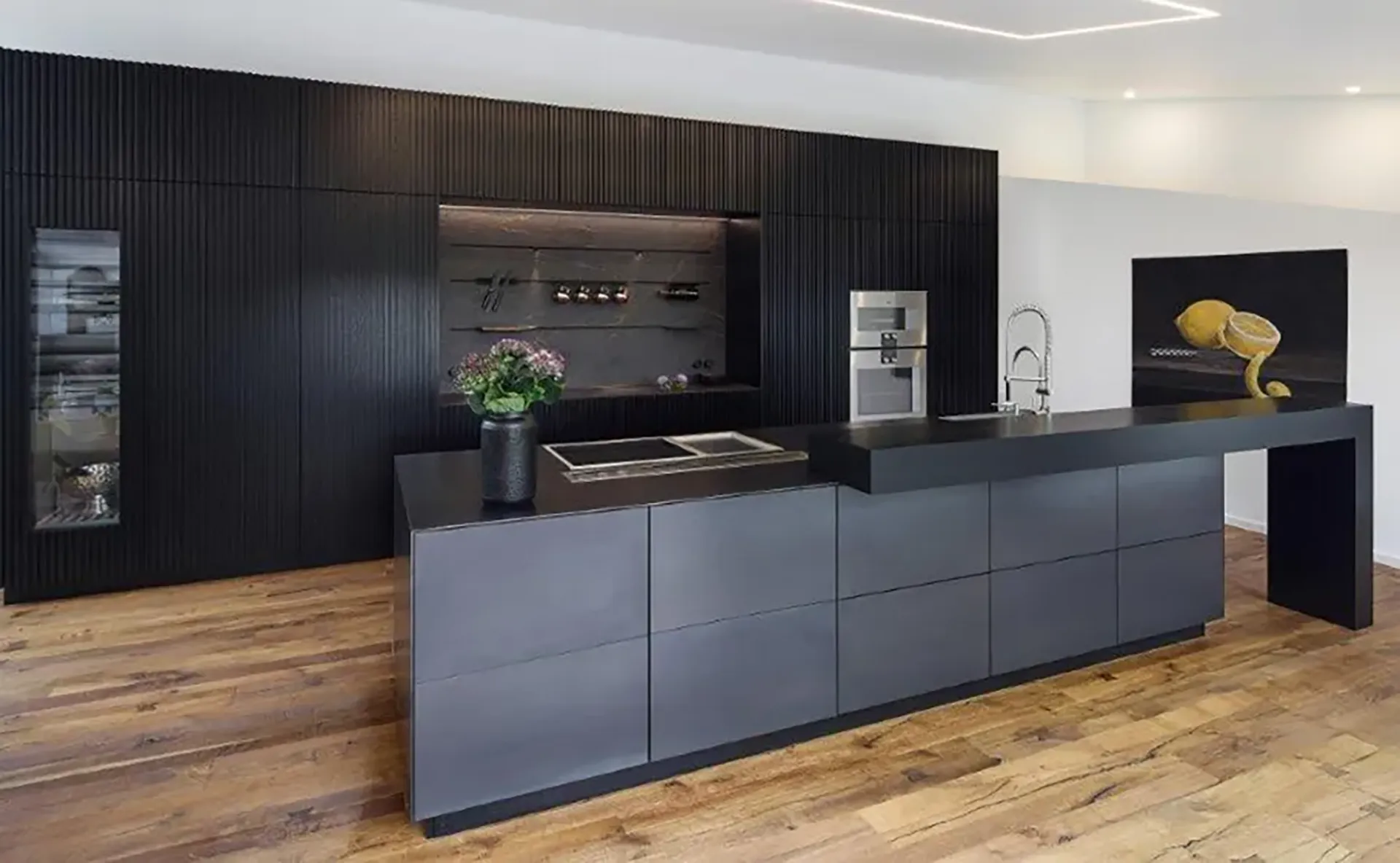
The Architect's Kitchen
Faber's Architect's Kitchens: here, form, function and material merge into a harmonious whole. Every detail follows a clear design concept: one colour, one material, one line. The result is a kitchen that radiates calm while possessing maximum expressive power.
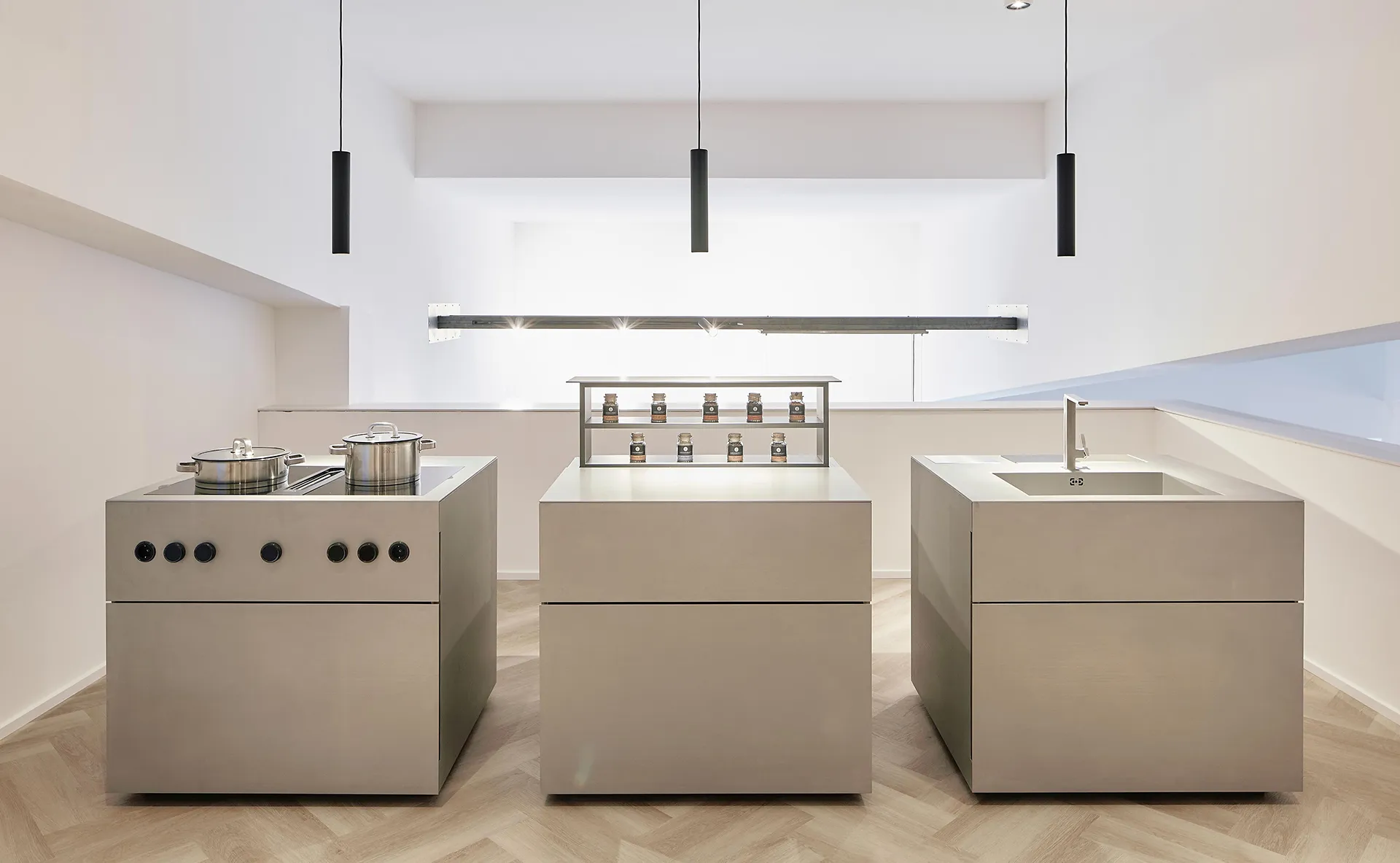
CUBE kitchens
Cube is our homage to understated luxury: clean geometry, precise joints, uncompromising materiality. The award-winning modular kitchen consists of four basic modules, combinable in up to 16 configurations – as an elegant run, an expressive island, or as an indoor and outdoor solution in Mallorca.
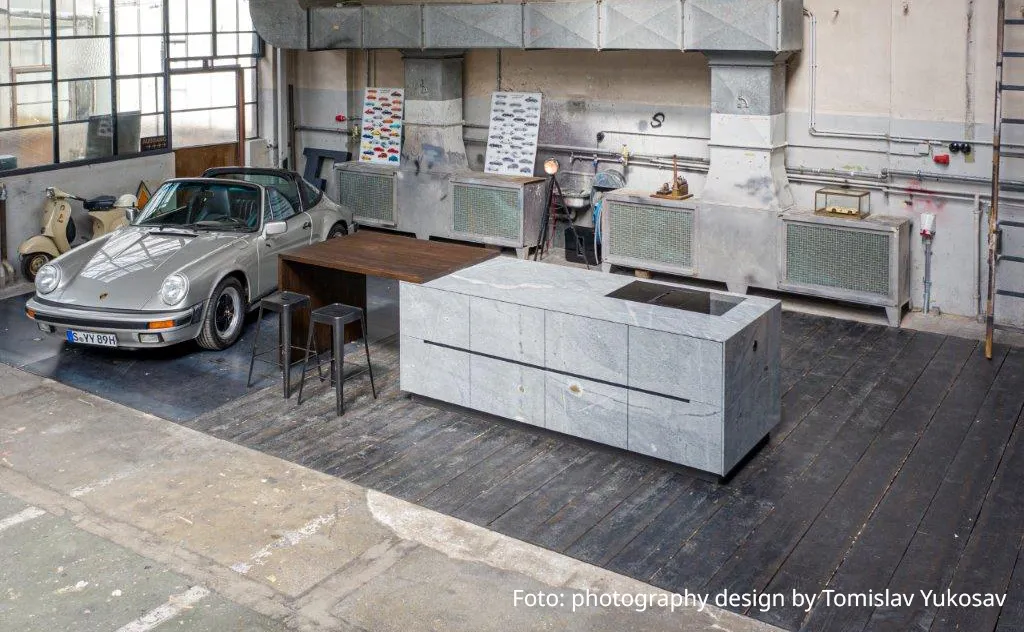
The Stone Kitchen
A stone kitchen by Faber Mallorca is more than simply a kitchen model – it is a statement of nature and design. Every surface tells its own story: from quartzite and slate to the finest marble. The individual veining of each stone is deliberately integrated into the design, creating a fascinating harmony of structure, colour and light.
Faber Küchenmanufaktur
Your vision, our
expertise! Bring your dream kitchen to life with Faber
Photo: photography design Tomislav Vukosav